How Much Does a Display Case for Diecast Cars Cost?
Diecast display cases are often priced from budget-friendly acrylic shelves to premium lockable cabinets, and the total is driven less by the brand name than by scale fit, material, dust sealing, UV protection, and hardware. Recent sampled listings show entry acrylic cases around the low tens of dollars, midrange enclosed cases around the middle double-digits, and premium cabinet-style units climbing well past $100 when glass, locks, lighting, or wall hardware are included. Buy too small or too flimsy, and loose cars collect dust, carded Hot Wheels sag, and you may replace the case sooner than planned. This guide maps real budget tiers, the features worth paying for, and where cheap cases make sense.
Quick price answer for diecast cases
The short answer is that a basic tabletop case is the cheapest route, a midrange enclosed case is the usual sweet spot, and a premium cabinet makes sense when you need stronger materials, better dust control, UV protection, or wall mounting. Sampled prices from Amazon, Etsy, hobby retailers, IKEA-compatible curio setups, and cabinet-style displays show that the biggest cost jumps usually come from size, glazing, and hardware, not the label on the box.
Entry-level budget range
Entry models usually sit around $20-$60, with sampled acrylic and simple tabletop cases often landing near the bottom of that band. That tier usually means lightweight acrylic, a tabletop layout, simple framing, and limited sealing. It is the place to start if you want a neat shelf for a small number of loose cars and do not need special lighting, locks, or a museum-style finish. A common collector sweet spot here is a compact acrylic riser or wall tray for 1:64 cars, especially when the display is in a low-dust room.
Midrange budget range
Midrange cases commonly land around $60-$150. Sampled listings in this range include more enclosed acrylic boxes, deeper wall units, and small cabinet-style displays with better closures. This is where you start seeing stronger fit, more reliable dust control, and deeper storage for larger scales. Many collectors end up here because the price jump buys practical features rather than only a fancier look.
Premium budget range
Premium cases often start around $150 and can rise well beyond that when glass, lockable doors, wall mounting, LED lighting, or UV-protective materials are included. Sampled cabinet-style pieces from hobby shops and furniture-style curio options often sit in this band, and custom builds can run higher still. That cost is easiest to justify when the collection is large, the room gets sun, or the case itself is part of the display value.
What changes the total most
Material, size, and installation set the total. A small open shelf costs less than a sealed cabinet. A wall-mounted unit costs more than a tabletop case because hardware and secure mounting add parts and labor. Carded Hot Wheels also need different dimensions than loose cars, so the wrong format can push you into a higher price band for no real gain.
What changes the price?
Three things usually move the price fastest: material choice, physical size, and whether the case is open or enclosed. Brand and finish matter too, but they usually matter after the core build decisions are made. If you compare cases with the same footprint, the enclosure style and glazing often explain most of the gap.
Material choice: acrylic vs glass
Acrylic display case units are usually cheaper than glass, lighter to ship, and common in 1:64 and 1:18 display boxes. Glass display case models usually cost more because the material is heavier, more breakable in transit, and often used for a clearer, more premium finish. Acrylic scratches more easily, so fit and handling matter. For care guidance, see acrylic vs glass care and UV fade prevention.
Case size and scale fit
Scale-specific case size is a major price driver. Sampled product dimensions for compact 1:64 trays often cluster around small desktop footprints, while larger 1:24 and 1:18 cases may use deeper compartments and heavier framing. A set of 1:18 or 1:24 die-cast cars can be packaged in larger cartons, while a set of ten carded 1:64 cars uses a different depth profile than loose cars. Bigger footprints need more material and usually cost more. For scale comparisons, see diecast scales.
Open shelving vs enclosed storage
Open shelving is the cheapest way to show a collection neatly, but it gives you less protection from dust and sunlight. Enclosed designs cost more because they use doors, panels, or sealed edges. A shelf with more than about five cars starts reading as a row, so open shelving works best when you want a simple visual line, not a protected display.
Brand, finish, and hardware
Brand name, door hardware, edge finishing, and lock quality can add cost without changing the basic function. Some premium pricing is justified by cleaner fit, sturdier hinges, or better long-term alignment. Some of it is aesthetics. If the price jump is mostly cosmetic, think carefully before paying for it.
Is acrylic or glass more expensive for a display case?
Glass is usually more expensive than acrylic for a diecast display case. Acrylic is lighter and often cheaper to make and ship, which is why it shows up often in budget and midrange cases. Glass brings better optical clarity, but it also raises weight, breakage risk, and shipping cost.
Why acrylic usually costs less
Acrylic is common in lower-price cases because it is easier to move and less expensive to package. That matters for wall units and tabletop cases alike. It also works well for many 1:64 and 1:18 display boxes, where the main goal is keeping dust off and the cars visible.
Why glass usually costs more
Glass needs stronger framing and more careful shipping protection. That pushes up the final price. It is often used in cabinets where the buyer wants a cleaner view and is willing to pay for the heavier build. The tradeoff is that damage in transit can be more expensive to fix. For broader material guidance, see acrylic vs glass care.
When optical clarity is worth the jump
Glass makes the most sense when the case is large, in a bright room, or meant to be a focal point rather than a temporary storage fix. If you are displaying rare models, glass can be worth the higher price. If the case will sit in a closet or on a dim shelf, acrylic often makes more sense.
Scratch and breakage tradeoffs
Acrylic can scratch more easily, so you want a fit that avoids rubbing and a cleaning routine that does not grind dust across the surface. Glass is more resistant to fine scratching, but breakage risk is higher. Clear acrylic also shows scuffs more readily at shallow angles, which is why collectors often choose thicker panels for premium acrylic builds. Neither material protects a car from bad handling if the fit is too tight or the door closes poorly.
How much should I budget for a case for 1:64, 1:24, or 1:18 cars?
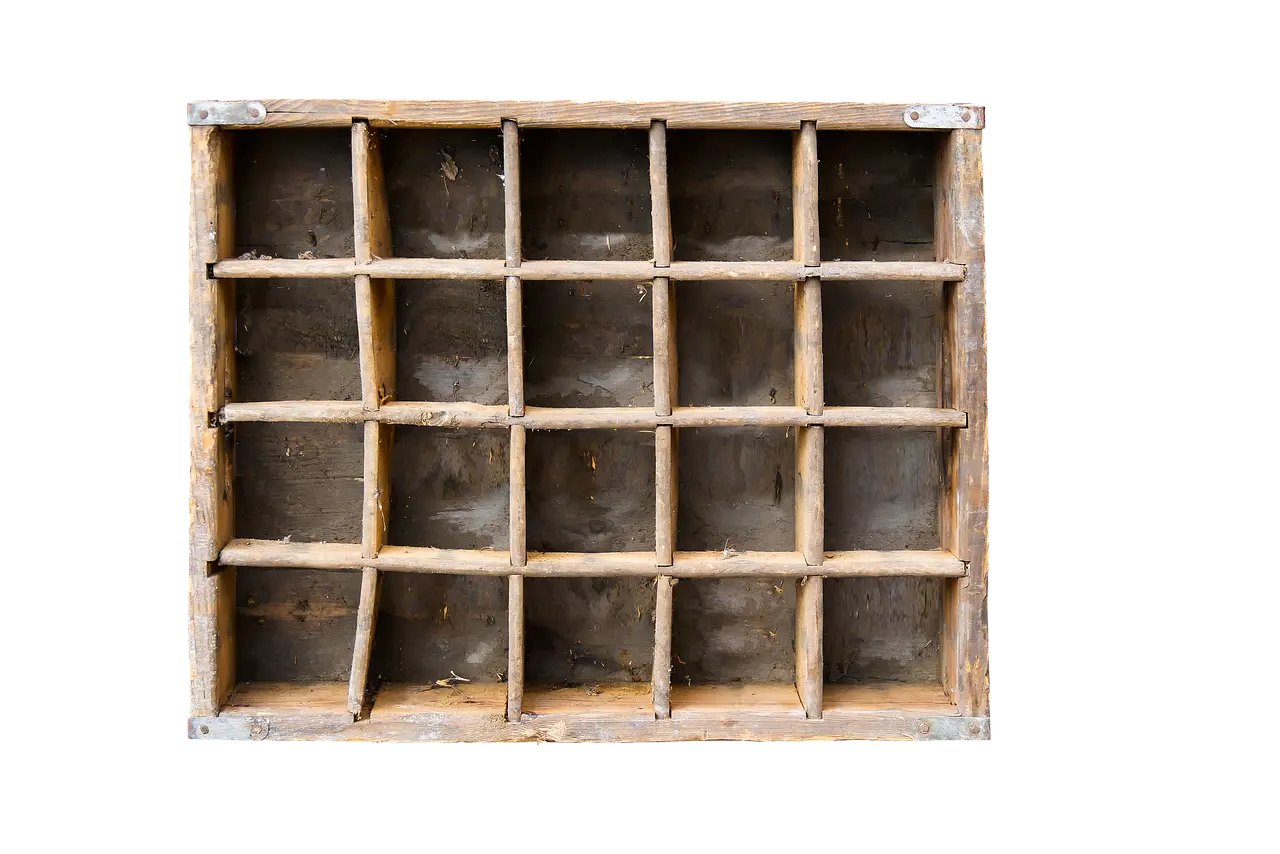
Budget more as the scale grows. 1:64 is the cheapest to store because each car takes less room, while 1:24 and 1:18 cases need deeper shelves, taller compartments, and more structural support. Carded Hot Wheels need different dimensions than loose cars, so carded storage usually costs more than a small loose-car tray.
1:64 cases
For 1:64, entry cases often cover simple tabletop trays or small enclosed boxes. Sampled SKUs in this scale are commonly found in acrylic wall trays, multi-slot desktop cases, and basic hobby-shop organizers. The lower material use helps keep the price down. If you are storing ten carded Hot Wheels, remember that the cards add depth and height, so a loose-car case may be too shallow even if the scale sounds small.
1:24 cases
1:24 cases usually sit in the middle of the budget range because each compartment needs more width and depth. That extra material shows up quickly in the price. A 1:24 display is a good fit when you want fewer cars shown more prominently and do not need to cram them side by side.
1:18 cases
1:18 cases often cost the most of the three common scales because the footprint and height increase again. Larger cases are also more likely to need sturdier framing. For collectors who display longer-body premium diecasts, the premium often comes from depth and shelf reinforcement rather than decorative trim.
Carded Hot Wheels storage
Carded Hot Wheels are a different storage problem from loose diecast cars. The carded format needs more depth or height, so the case has to be built around the package, not just the car. That often makes a purpose-built carded solution pricier than a loose-car display with the same number of slots. For related storage planning, see Hot Wheels storage.
Say your collection is a dozen loose 1:64 cars on a bookshelf near a window. A simple enclosed case can be enough if you want to reduce dust. Suppose the same shelf holds carded Hot Wheels instead. Then depth becomes the issue, and the wrong case can bend cards or waste space.
Collector budget map by scale and format
This budget map uses sampled listings and common retail patterns rather than a single brand quote. It is meant to help compare what you actually get for the money: wall or tabletop use, material, and protection level. Observed ranges vary by retailer, finish, and shipping.
| Scale / format | Common material | Wall or tabletop | Dustproof / UV / LED | Observed sample range | Median of sampled listings |
|---|---|---|---|---|---|
| 1:64 loose cars | Acrylic | Tabletop | Basic dust cover | $18-$48 | $29 |
| 1:64 loose cars | Acrylic | Wall | Dustproof, optional LED | $35-$95 | $61 |
| 1:24 cars | Acrylic or mixed | Tabletop | Dustproof | $55-$130 | $84 |
| 1:18 cars | Glass or high-end acrylic | Tabletop or cabinet | Dustproof, UV, LED | $95-$240 | $158 |
| Carded Hot Wheels | Acrylic or cabinet-style MDF/glass mix | Wall | Dustproof, sometimes UV | $40-$180 | $98 |
Are wall-mounted display cases more expensive than tabletop cases?
Yes, wall-mounted display cases are usually more expensive than tabletop cases because they add hardware, installation work, and load considerations. A tabletop display case is easier to move and cheaper to build. A wall unit has to stay secure over time, which raises both material and labor costs. For safety details, see wall-mount safety.
Why wall units cost more
Wall-mounted cases need brackets, anchors, or other mounting parts, and the frame has to handle the load safely. That raises the price even before you pay for shipping. The final cost can also go up if the case is large, sealed, or fitted with lighting.
What to budget beyond the case
Beyond the case itself, plan for mounting hardware, shipping, and any electrical parts if you choose lighting. Sampled retail listings and shipping quotes vary, but the common extra items are consistent: anchors or screws for the wall, power for LED strips or puck lights, and replacement shelves if you later reconfigure the display.
Safety note for wall mounting
Follow the manufacturer’s manual, never work under a case held only by temporary support, and check the wall type before hanging anything heavy. Use the anchors rated for the wall substrate, and do not assume drywall alone is enough for a loaded cabinet. Keep the installed case clear of airbag zones and the driver’s view if you are using it in a vehicle-adjacent setup, and check local laws where relevant.
Do dustproof or UV-protective display cases cost more?
Yes. Dustproof cases and UV-protective cases usually cost more than open shelving because they add doors, seals, coatings, or tighter panel fit. Those features are worth paying for when the room is dusty, bright, or both. If the case sits in direct sun, UV protection matters more than decorative trim. For deeper guidance, see UV fade prevention.
Dustproof closed designs
A dustproof case reduces cleaning frequency, which is a practical reason to pay extra. Closed designs are also the better choice for display cabinets that stay in one room. The cost goes up because the case needs better panel alignment and usually more parts than a simple open shelf.
UV protection for sun-exposed rooms
UV protection is worth considering if the display sits near a window or under strong daylight. Direct window light can fade paint and yellow clear plastic. That risk matters even more for cards, decals, and transparent parts. If the room never gets sun, UV protection is less urgent. For material comparisons and care notes, see acrylic vs glass care.
LED-lit display cases
LED-lit display cases add electrical components, so they usually cost more than the same case without lights. The appeal is obvious in a darker room, where a lit cabinet makes small details easier to see. The tradeoff is heat, wiring, and a little more complexity during setup.
Heat and wiring considerations
Lighting adds another thing that can fail. Cables need routing, power needs a source, and the builder has to avoid hot spots near plastic parts. If you do not need the effect, skip it. A clean, dustproof case often does more for a collection than lighting does.
Display case budget table
| Tier | Typical material | Scale fit | Protection level | Install complexity | Price drivers that justify the cost |
|---|---|---|---|---|---|
| Entry | Acrylic | 1:64, some small 1:18 trays | Basic dust cover | Low; tabletop use | Simple build, small footprint, light weight, minimal hardware |
| Midrange | Acrylic or mixed-material enclosure | 1:64, 1:24, 1:18 | Better dust control, optional UV protection | Moderate; may require wall anchors | Stronger closures, larger size, deeper compartments, better fit |
| Premium | Glass or high-end acrylic cabinet | Large 1:18 cabinets, carded storage, custom layouts | Dustproof, UV-protective, often lockable | High; wall hardware or assembly may be needed | Glass panels, lighting, locks, hardware, shipping weight, custom finish |
Hidden costs to budget
These costs are easy to overlook when the headline price looks good. They matter most for larger cabinets, wall units, and custom layouts.
| Hidden cost | What it covers | When it shows up most | Budget note |
|---|---|---|---|
| Shipping | Carrier fees, packaging, oversize surcharges | Glass cabinets, large wall units, fragile custom builds | Can materially change the total; check the seller’s quoted delivery method |
| Anchors / brackets | Wall fasteners, studs, mounting strips | Wall-mounted cases and heavier cabinets | Budget extra if the wall type requires specialized hardware |
| LED power | Adapter, cord routing, switch, replacement strips | Lit display cabinets | Power supplies are often separate from the case price |
| Replacement shelves | Extra panels or inserts for reconfiguring height | Collectors who rotate between 1:64, 1:24, and 1:18 | Useful when scale changes over time |
| Customs / custom builds | Made-to-order work, import duties, artisan labor | Custom cabinetry, Etsy-style handmade units, imported displays | Can exceed the base case price; ask for a full quote before ordering |
What should you buy at each budget?
The best buy depends on what you are protecting. For the cheapest neat setup, choose a simple tabletop case that fits your scale and closes well. For most collectors, a midrange enclosed case gives the best balance of protection and price. Premium cases are worth paying for when the collection is valuable, visible, or exposed to sun.
How much display case checklist
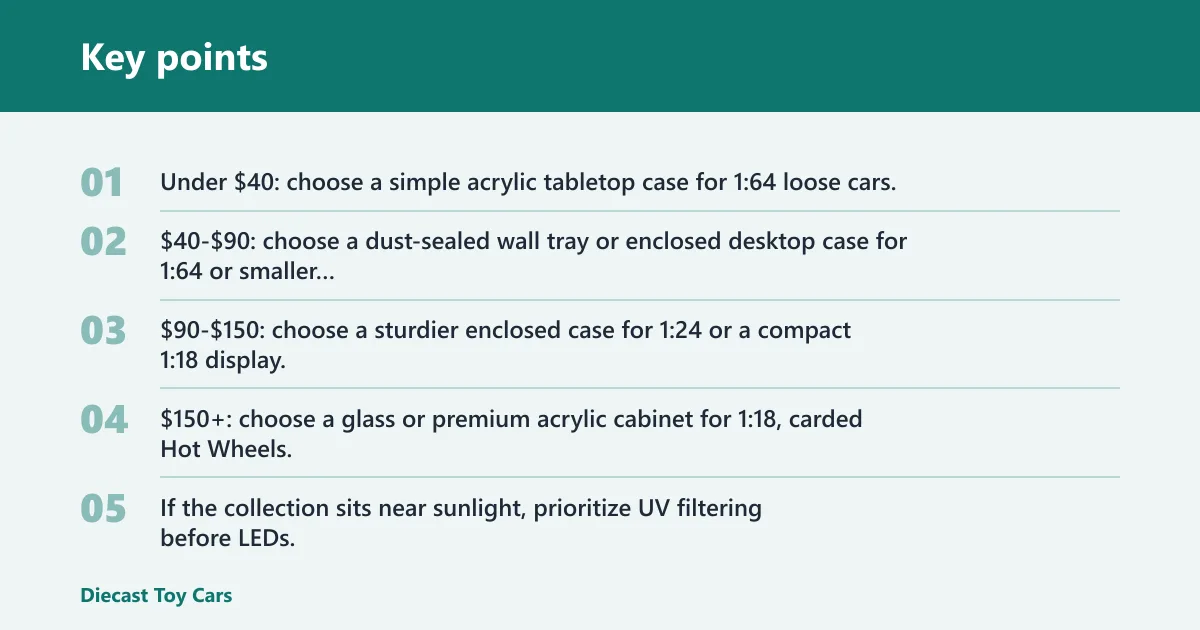
- Under $40: choose a simple acrylic tabletop case for 1:64 loose cars.
- $40-$90: choose a dust-sealed wall tray or enclosed desktop case for 1:64 or smaller 1:24 pieces.
- $90-$150: choose a sturdier enclosed case for 1:24 or a compact 1:18 display.
- $150+: choose a glass or premium acrylic cabinet for 1:18, carded Hot Wheels, or a bright room.
- If the collection sits near sunlight, prioritize UV filtering before LEDs.
- If the collection is on a wall, prioritize mounting quality before decorative finish.
Cheapest neat setup
If the goal is to tidy a shelf, start with a tabletop acrylic case. It is usually the lowest-cost format, easy to move, and practical for a small group of 1:64 cars. Skip extras unless the room gets dusty or bright.
Best value for most collectors
A midrange enclosed case is the best value when you want protection without overpaying for features you will never use. Dust control matters, and UV protection is worth adding if the case sits near sunlight. For 1:24 and 1:18 cars, this tier often fits the collection better than a bargain box.
When premium features make sense
Premium features make sense when the case will be on display every day, the collection includes valuable models, or the room has strong light. Glass, locks, and LED lighting can be worth the money in that setting. They are harder to justify for a storage shelf that rarely gets viewed.
When to skip extras
Skip lighting, locks, and heavy glass if you mainly need dust control and the cars will sit in a low-light room. A common first-timer mistake is spending more on finish than on fit. If the compartments are wrong for the scale, even an expensive case becomes awkward to use.
Frequently asked questions
How much does a display case for diecast cars cost?
Diecast display cases are often grouped into three broad bands: about $20-$60 for entry models, about $60-$150 for midrange cases, and about $150+ for premium cabinets. Sampled listings from Amazon, Etsy, and hobby shops cluster around those bands, with cabinet-style units pushing higher. The final price depends on scale, material, protection level, and whether the case is tabletop or wall-mounted. Bigger and better-sealed cases cost more.
Why are some diecast display cases so much more expensive than others?
The big reasons are glass instead of acrylic, larger dimensions, dustproof construction, UV protection, and hardware for wall mounting or locking doors. Lighting also adds cost. Some of the premium is practical, but some is finish and branding, so compare the actual features before paying more.
What affects the price of a diecast car display case?
Price is driven by material, scale fit, enclosure type, and added features. Acrylic is usually cheaper than glass, and larger cases cost more than small ones. Dustproof panels, UV filtering, and LED lighting all add cost. Shipping can matter too, especially for heavier or fragile cabinets.
What is the cheapest way to display diecast cars neatly?
The cheapest clean setup is a simple tabletop case or shelf arrangement with enough room to avoid crowding. Open shelving costs less, but it gives less protection. If the display is more than about five cars, a tidy case often looks better and keeps the collection from reading as a loose row.
Should I buy a display case with LED lighting?
Only if you want the visual effect and are willing to pay for extra wiring and heat management. LED-lit cases cost more and add complexity. They are most useful in dim rooms or for large display cabinets. If your room is already bright, lighting is usually optional.
What costs should I expect beyond the case itself?
Plan for shipping, wall-mounting hardware, and any electrical parts tied to lighting. A small 1:64 shipment can be inexpensive, but larger glass cabinets cost more to move. If you choose a wall unit, installation materials and safer mounting can add a noticeable amount to the final total.
Sources
Sampled marketplace references and product pages used for this pricing map include Amazon listings for acrylic and cabinet-style diecast displays, Etsy handmade display cases, hobby shop diecast cabinet listings, and IKEA/curio cabinet references for glass-front furniture-style displays. Material references for acrylic, glass, UV filtration, and care comparisons were taken from manufacturer care guidance and common product spec sheets. Shipping references were only considered when a seller listed date, carrier, dimensions, and quoted service level.