Should Your First Diecast Collection Be Loose or Carded?
Keep cars loose for play, handling, shelf display, and photos. Keep them carded if condition, later resale, or unopened originality matters more. Open a car too early, and you can give up collector premium or end up with pieces you never bring out. This guide gives a simple decision framework, plus storage and mixed-collection tips for beginners.
Choosing between display and package condition
Loose diecast cars come out of the package. That makes them easier to handle, photograph, roll, and line up on a shelf, but it also leaves the finish exposed to dust, paint chips, and axle wear. Carded diecast cars stay in the factory blister card, so package condition becomes part of the collectible.
What loose means for handling and display
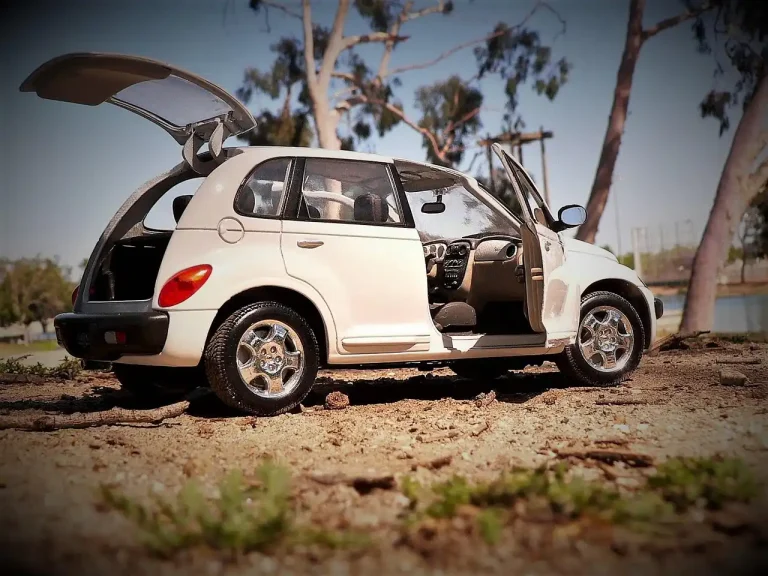
A loose car is the better choice when you want to take it out of the package, turn it in your hand, or move it around often. It is also the easier option for photography because you can control the angle without reflections from a blister. The tradeoff is direct exposure, so scratches and chipped paint can show up sooner if the car sits unprotected.
What carded means for condition and storage
A carded car stays sealed in its original blister package, which is often important to mint-in-package collectors. Card corners, bubble clarity, creases, dents, and edge wear all affect collectability. The sealed status can support a premium, but the package is harder to inspect closely unless you open it.
Where beginner confusion usually starts
Most beginners are not choosing between “good” and “bad” options. They are choosing between daily enjoyment and package condition. If the goal is to play, handle, or display loose cars, opening makes sense. If the goal is condition-sensitive collecting or later resale, keeping the card sealed usually fits better.
Which choice fits your goal?
Start with the goal, not the packaging. If you want to play with the car or display it out of the package, loose is the better fit. If you care most about mint-package condition or resale, keep it carded. If you want both kinds of enjoyment, use a mixed strategy from the start.
Pick loose if you want play or easy display
Loose works best for kids, casual collectors, and anyone who wants quick shelf display without package bulk. It is also the better choice for photography, because you can position the car directly. You give up sealed condition, but you gain easy handling and less worry about blister damage.
Pick carded if you care about sealed condition or resale
Carded is the safer choice for mint-in-package collecting and for items you may sell later. Resale value often depends on package condition, especially on higher-demand brands and series. A sealed car with clean card corners and an intact blister usually attracts more collector interest than the same car opened and handled.
Pick mixed if you want both
A mixed approach is often the best first plan. Open common cars for display and play, and keep favorites, chase pieces, or any car you may want to resell sealed. This keeps the collection usable while preserving some mint-package pieces for future interest.
Diecast choice table
| Collector goal | Best choice | Why |
|---|---|---|
| Kids’ play | Loose | Safe handling, repeat use, and no concern about bending the card or cracking the blister. |
| Budget collecting | Loose | You can buy more cars for the same spend and focus on common castings instead of package condition. |
| Resale focus | Carded | Mint-package condition can carry a premium, and sealed status matters more for demand on some brands and series. |
| Favorite casting | Mixed | Open one for display and keep one sealed if the model matters to you or may matter later. |
| Duplicate purchase | Mixed | One can be opened for enjoyment while the second stays sealed for condition or trade value. |
| Shelf display | Loose | Single-car and multi-car display cases work well, and loose cars show cleanly without package glare. |
| Long-term storage | Carded | Blister protectors and card sleeves help reduce dust, stacking damage, and UV exposure when stored correctly. |
| First chase piece | Carded | Rare or hard-to-replace pieces are usually better kept sealed unless you specifically want an opened display copy. |
What sealed condition really means
Sealed condition is more than “still in the package.” For mint-in-package collecting, the card and blister both matter. Clean corners, a clear bubble, and no creases or edge wear can help a car hold collector appeal. Once the package is bent, dented, or scuffed, the value picture changes.
Card corners, bubbles, and edge wear
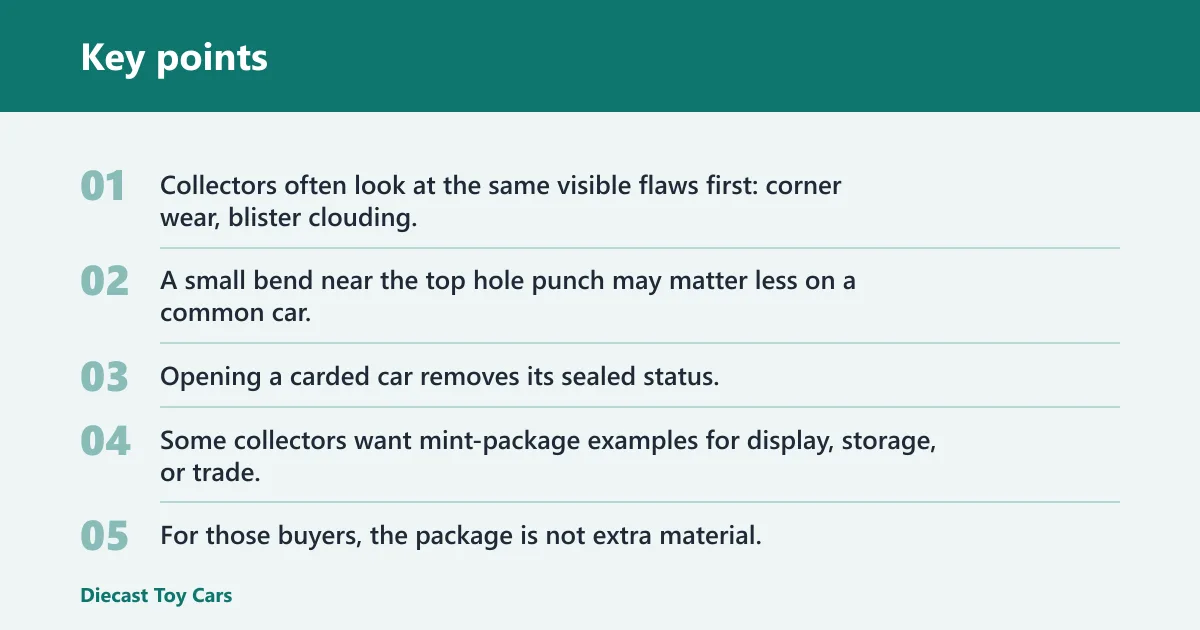
Collectors often look at the same visible flaws first: corner wear, blister clouding, dents, creases, and edge wear. A small bend near the top hole punch may matter less on a common car, but it can matter a lot more on a rare release. The package is part of the item.
Why package damage affects collector value
Opening a carded car removes its sealed status, and package damage can lower appeal even if the car itself is untouched. Some collectors want mint-package examples for display, storage, or trade. For those buyers, the package is not extra material. It is part of the collectible.
When a common carded car is still worth keeping sealed
Not every sealed car needs to be treated like a rare piece. A common release can still stay carded if you simply prefer unopened items, want a cleaner shelf look, or plan to keep a mixed collection. If the car is common and easy to replace, the choice can lean toward enjoyment rather than resale.
What to check on a loose car
Loose-condition checks are simpler, but they still matter. Look for paint chips, scratches, worn tampos, wheel roll quality, and axle straightness. If the car rolls crooked or the wheels drag, that can affect display quality and play value even when the body paint looks fine.
Paint chips and scratches
Check the nose, roof, mirrors, spoiler, and lower edges first. Those spots pick up damage quickly after repeated handling. Fine scratches may not matter on a budget common, but they do matter if you want a clean display piece or a later trade item.
Tampos and printing wear
Tampo wear shows up as fading, lifting, or rubbed graphics. This matters more on cars with detailed liveries or race markings. A clean casting with worn graphics may still be fine for play, but it is less attractive for display or resale.
Wheel roll and axle straightness
Roll the car on a flat surface. Wheels should move without rubbing the body or wobbling badly. Bent axles can tilt the car or make it track unevenly. If the goal is play value, a decent roll matters more than perfect package condition.
When loose condition matters less
Condition matters less when the car is for a child, a desk display, or a casual collection of common models. In those cases, small flaws may be acceptable if the casting is fun to look at and handle. Rare castings are different. Their condition usually matters more.
How should you store and display them?
Storage depends on whether the car is loose or carded. Carded cars benefit from sleeves and blister protectors. Loose cars do better in display cases. In both cases, the goal is the same: reduce dust, protect corners and paint, and avoid stacking damage where possible.
Card sleeves and blister protectors
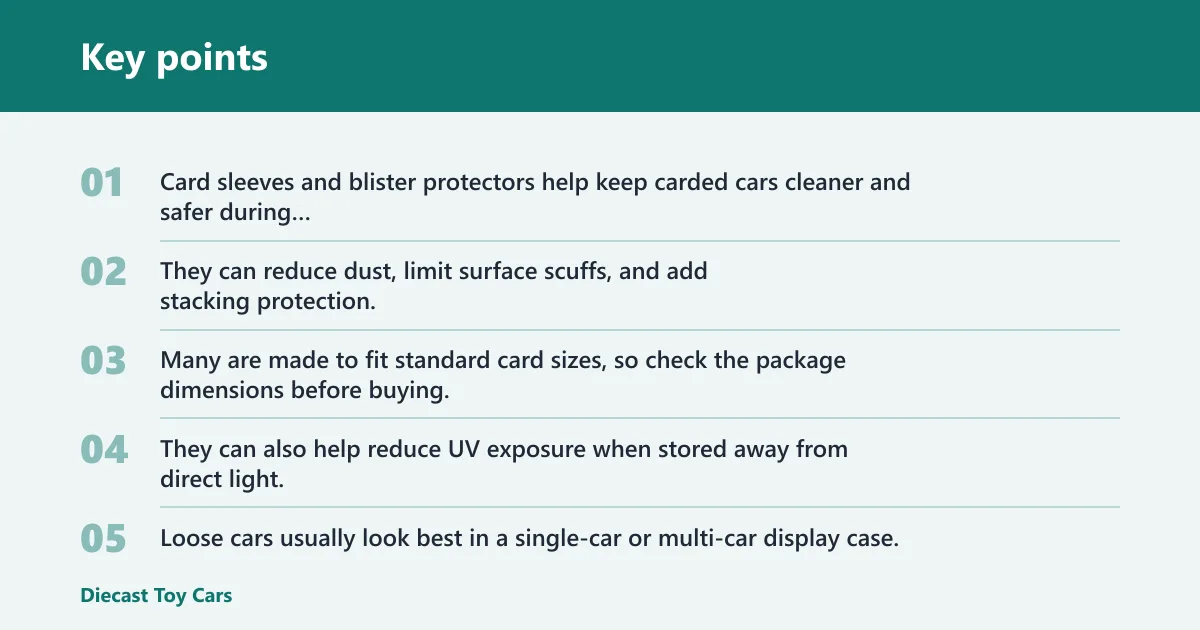
Card sleeves and blister protectors help keep carded cars cleaner and safer during storage. They can reduce dust, limit surface scuffs, and add stacking protection. Many are made to fit standard card sizes, so check the package dimensions before buying. They can also help reduce UV exposure when stored away from direct light.
Display cases for loose cars
Loose cars usually look best in a single-car or multi-car display case. These cases keep dust off the paint and make shelf or wall mounting easier. They also let you arrange cars by brand, theme, color, or series without package bulk taking over the space.
Dust, stacking, and UV protection
Dust is the main reason loose cars need a case or enclosed shelf. Carded cars need protection from crushed corners and pressure on the blister. Direct sunlight can fade both paint and card art, so UV exposure is commonly limited wherever the collection sits. Stack carefully, or do not stack at all.
Say your first shelf is about 30 cm wide and you buy six common cars. Loose cars in a narrow display case can sit side by side with little wasted space. Carded cars would need more depth and more care to avoid bent corners, so the storage choice changes the collecting plan.
Should you open doubles?
Opening a duplicate is often the easiest way to get both enjoyment and sealed condition. If you own two of the same casting, one can be opened for display or play while the second remains carded. The budget tradeoff is real, though, so this works best for favorites and chase pieces.
Why duplicates make the decision easier
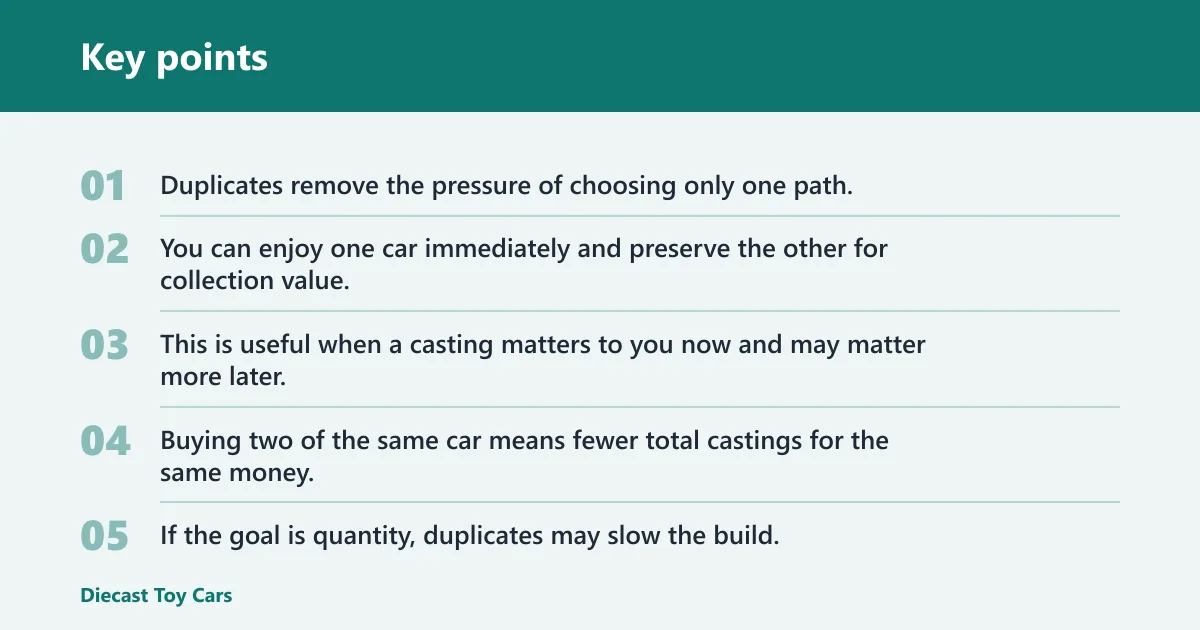
Duplicates remove the pressure of choosing only one path. You can enjoy one car immediately and preserve the other for collection value. This is useful when a casting matters to you now and may matter more later, or when you want to compare loose condition against sealed condition in the same collection.
How the budget tradeoff works
Buying two of the same car means fewer total castings for the same money. That matters on a starter budget. If the goal is quantity, duplicates may slow the build. If the goal is a blend of play, display, and future value, the tradeoff can be worth it on select favorites.
When to keep both sealed
Keep both sealed when the car is rare, especially clean, or likely to matter later as a trade item. The same caution applies to sentimental pieces. If replacement would be difficult or expensive, leaving both carded is the safer call.
Suppose a chase piece arrives with clean card corners and a clear bubble, but the car is not a daily play item. Keeping it sealed preserves the package premium. If a second copy appears later, that is the better time to open one.
Frequently asked questions
Should I keep my first diecast cars carded or take them out of the package?
Keep them carded if you care most about sealed condition, future resale, or unopened originality. Open them if you want play value, easy shelf display, or a car you can handle freely. For many beginners, a mixed start works best: open common cars and keep special ones sealed.
Do loose diecast cars lose value compared with carded ones?
Often, yes, but not always by the same amount. Loose cars usually lose the mint-package premium, and condition becomes the main factor. Brand, series, rarity, and the specific casting matter too. A common loose car may still be easy to move, while a rare sealed one can command stronger interest.
Which is better for beginners, loose or carded diecast cars?
Loose is usually better for beginners who want to play, display, or learn what castings they enjoy most. Carded is better if the beginner wants to keep items sealed or may resell later. If the choice feels uncertain, start with one or two open cars and one sealed example.
How do I choose between display, storage, and resale when starting a collection?
Pick the main goal first. Display points toward loose cars in cases. Storage and resale point toward carded cars in sleeves or blister protectors. If the budget is small, avoid paying extra for packaging on common cars and spend on castings you actually want to own, open, or keep sealed.
Are blister cards worth keeping if I only buy budget cars?
Yes, if you want sealed condition, neat storage, or a future trade option. Even budget cars can benefit from clean cards and intact blisters. If you never plan to keep them sealed, though, the card adds less value than the car itself. The choice should follow your goal, not habit.
What if I want to play with diecast cars but also collect them?
Use a mixed strategy. Open common cars for play and display, then keep favorites, rare pieces, and sentimental finds sealed. If a casting matters a lot, consider a duplicate strategy so you can do both. That approach keeps the collection fun without giving up every sealed package.
What should beginners consider before breaking a carded car out of the pack?
Check whether the car is rare, hard to replace, or likely to matter in resale. Look at the card corners, bubble clarity, and any existing wear, because package damage can lower collectability. If the car is common, opening it is easier to justify. If it is special, pause first.